Wednesday, 4 May 2011

J.K. Rowling - Harry Potter and The Philosopher's Stone

For years I had been purposely going out of my way to avoid touching or going within a hundred feet of the Harry Potter books for fear of bursting into flames at the sight of the spectacled wonder kid. Then I got one of the books for Christmas, (I think it was the second one, which was stupid in itself as everyone knew I hated Potter. Why assume I’ve read the first one? Or am I the only person in the world who doesn’t care about order?) and while I didn’t spontaneously combust, I still found myself disgusted by the idea of reading it.

Anyway, the years rolled by and Christmases came and went without a sniff of Potter books coming my way. The movies came too and I saw a few of them on DVD and I was thinking the same thing; I fucking hate Potter! Then I decided to study writing and all its wonderful elements, including popular fiction, but I still managed to avoid Potter until my final year, when I became old and wise enough to put aside almost thirteen years of irrational prejudice and read the first in the series.

I have to stay, reading the book as opposed to watching the movie totally did not change my mind. Harry Potter on the screen did not work for me for the simple reason that Harry Potter is eleven years old. Sure he’s got a wand and that but so does everyone else around him and they have more experience and therefore, no matter how incompetent they are made out to be, should not be bested by an eleven year old boy and his two friends.

For the sake of fiction and fantasy, I don’t have a problem with the potion and chess puzzles to get passed doors, and I’m fully on board as far as a magical invisibility cloak goes, (if I got one of those for Christmas, I would love it) but I draw the line when you write a book full of magical stuff and totally ignore the fact that common sense plays a big part in day to day life, even if you wear a pointy hat and ride around on a broom.

In fact, here is something that the movie did better than the book. Stopped Potter from talking as much. Every line that Potter has is the voice of a character three or four years older than him and also his way of thinking. His parents are dead, he’s been locked in a cupboard and bullied for the whole of his life. A giant knocking down a door and taking him away on a flying motorbike, while being quite cool, does not take away eleven years of pain and suffering. Even if it did, you would surely be a little more grateful to people that rescued you that to break almost every rule going and consistently do the opposite of what you’re told.

To me, its lazy character development. All idea and no substance. I’m not saying J. K. Rowling is a bad writer, far from it, technically she’s great and gets all the little details of the writing bang on. But there is this thing missing from HPATPS that fits somewhere between the page and the idea that connects to story to the real world, something that allows the audience to buy into the story, regardless if it’s for children or adults.

I’m not going to make recommendations because the chances are you’ve already read it, or you don’t want to.

Harry Potter and the Philosopher’s Stone by J.K.Rowling was published by Bloomsbury Publishing Plc in 1997. RRP £6.99 (Paperback)

Wednesday, 12 January 2011

Melvyn Burgess - Doing It

There was a lot of localised hype surrounding this book during my first year at University when several of my peers had to read it for some new contemporary literature module. There were, of course, the standard student grumbles; ‘Why do we have to read this shit?’; ‘Melvyn Burgess? Not exactly the next Shakespeare?’; ‘I’m not going to bother reading it, I’ll just find a summary on the internet. Ha ha ha, I’m so clever.’

Whereas the last option is one that some took, the book is 330 pages long with text big enough to warrant reading the entirety in one sitting. The first option is one I thought myself, I mean, a cover comprising a woman’s legs with her undies just above her knees doesn’t exactly scream Booker Prize Winner. But books are like people, they can be deceiving on the outside but it’s what’s inside that counts. Or, to coin an overused cliché, you can’t judge a book by its cover.

However, you can be forgiven for prejudging Doing It, if not by its front cover, then by its first paragraph; “‘OK,’ said Jonathon. ‘The choice is this. You either have to shag Jenny Gibson – or else that homeless woman who begs spare change outside Cramner’s bakers.’” The book is pretty much that, banter between 17 year old lads. Page 68 is home to one of my favourite ever lines; ‘Mr Knobby Knobster grinned his woozy little hardman’s smile.’ Does it get any better than that? No.

Doing It not only deals with the sex lives of the main characters, but also focuses on the pain of dealing with parental separation and adultery. Burgess gets the balance about right. His characters are well developed and, mainly through the use of dialogue, their reactions to situations suit their ages.

Controversy is a word commonly associated with Burgess, which is a shame because if the controversy is the main reason behind the success of his novels, then it’s a waste because on evidence, he is a very talented writer. Sure, he is no Shakespeare or Joyce (although this may give Joyce too much credit) but his writing is clean and his stories are well-shaped and not overdone. I don’t want to wade through ten pages of description of Dino’s house, which intricate details of every single ornament and carpet, and a tangential story about how his cat went missing. I do want to know if he is going to get into Jackie’s pants. Burgess understands this and while, yes all the plates and stuff needs to be tidied away before the party, he doesn’t let it take away from his story.

I think that’s all of the good stuff... wait! There’s one more. Conversations with more than three people involved. Burgess gets it right without having to pin each line of dialogue with who is speaking. Again, this is because of his skill as a writer and cleverly created characters.

Now for the reverse argument. Yes, Doing It is a well written book, but it is fairly simple, and therefore there is less margin for error. The Children’s Book bored the hell of me but its tremendous length and complex structure made it a great work of fiction even if it wasn’t my cup of tea.

Also Doing It doesn’t come close to a conclusive ending, it just stops. It comes out of nowhere, you’re approaching the end of the book and wandering where the rest of it is. Is there a sequel? Burgess seems to be worried about waffling on too much, but I think there could have been at least another hundred pages left to this one. It’s not inclusive to point where I’m satisfied and thinking of my own conclusions, but simply disappointed because I wanted to know where the characters went. It’s mentioned that Dino goes to University. I wanted to know more about what happened to him, and the rest.

This is one of the few books I would recommend to my close friends, but that is purely for inside jokes, and the fact that they all love The Inbetweeners. But if you don’t take your books too seriously, are not easily offended and fancy a few hours of light entertainment, Doing It is definitely for you.

Doing It by Melvin Burgess was published by Andersen Press Limited in 2003. RRP £6.99 (Paperback)


Monday, 20 December 2010

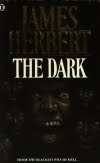
James Herbert - The Dark

Many people get rid of books. The lucky books get given to charity and the most unfortunate go straight to the tip often with a half eaten sandwich or rotting fruit. I witnessed this sight, just the other day and it saddened me deeply. That’s why I jumped at the chance to rescue a few books from suffering a similar fate. The Dark was one of these lucky books to be plucked from the brink of destruction. It was in a crate on a pavement with a sign saying, ‘help yourself.’ So I took it.

At first I was pleased with my find: compelling protagonist; check. A saucy love interest; check. The grounds for a spine tingling scary thriller; check. But after writing the first thirty page, it seems that James Herbert decided to abandon all the rules of putting together a well structured paragraph for the rest of the book.

Looking back over my notes, the first glaring error occurs on page 36. By glaring, I mean a simple line break would have fixed it but let’s take our first trip to grammar corner and examine the inner workings of the error:

There are two characters in the scene, Bob and Les. The sentence goes as follows:

‘See anything Les?’ He glanced angrily towards Bob who had crept stealthily up the front path.

According to this sentence, not only is Les talking to himself but he is also getting angry at Bob in the process. Dangling modifier equals bad writing. This kind of thing happens throughout the book but this is the worst example. Many paragraphs are written from multi-perspectives with what appears to be a complete lack of control or awareness of the English language.

I could go on listing the silly errors... so I will. Miss Kirkhope, an elderly rich lady, has a maid from Portugal or Spain or something. The point is English is not her first language, yet throughout her earlier scenes, she speaks better English than me. Then a little later, she says, ‘Miss Kirkhope will see you much soon.’ Now, this is either a typo or a character inconsistency and I’m not sure which is worse.

Towards the end, the non-word, ‘foosteps’ is used, but this is the more forgivable of the offenses. It may seem like I’m being a bit picky, but the point is, if the mistakes are noticeable, the editing should have been more thorough and if the story stinks, they stick out even more.

The worst thing about the book is the basic paragraph structure. It becomes tiring trying to keep up with the volume of different perspectives the story is being told from, and in scenes with a few characters and a lot of action it becomes hard to work out what’s going on. When reading the fight scenes, the only thing I could picture was that comic dust could with the occasional limb poking out and ‘bang’ and ‘pow’ written around it.

I don’t like talking about how books end, so I won’t go into any details, but I will say this. James Herbert hasn’t really grasped the concept of the horror genre. The whole storyline is fine until halfway, then the writing errors begin to ruin the story, then Herbert completely destroys it with the most nonsensical conclusion ever. The worst part is that you could see where it was going but it still didn’t make any sense, and that’s where the writer should be feeling ashamed of himself. The whole point of horror being scary is that it’s believable, and if it’s not believable then it has to at least make sense in its own context. James Herbert has achieved a double fail for writing an unbelievable horror that doesn’t make sense.

I would honestly recommend The Dark as a future creative writing set text. That way, lecturers could use it as an example of what not to do. They could even set tasks where the students have to find as many mistakes as possible. Perhaps the winner could be awarded a prize... some chocolate perhaps.

The Dark by James Herbert was published by New English Library in 1980. RRP £3.50 (Paperback)

The Dark is also being reprinted for release in October 2011, RRP £7.99 (Paperback)


Saturday, 9 October 2010

Jules Hardy - Altered Land


This book has sat on my ‘to read’ shelf for about three years, so I thought I would remedy this by taking it on holiday and eliminating my other reading options. I bought the book in my first year of university as it was recommended by a tutor... and Jules Hardy was a Bath Spa Graduate.

Also I found the title compelling, and we all know how important titles can be after the Pacific Vortex!­ incident. Altered Land is quite ambiguous in its meaning; it could have been about a place that had changed after an event, or some twisted dream version of the real world. Jules Hardy’s Altered Land is the former, or rather how the lives of people are altered after an event.

I have to say, the first section of the book is one of the unsurpassed bits of prose I’ve read in a long time. The characters are well structured and even though the prose isn’t in chronological order, it’s still easy to follow. There is a missing ‘a’ on page 77 but that’s no big deal, and I was genuinely surprised by the revelation.

However, there are three things that annoyed me. There are POSSIBLE SPOILERS AHEAD just so you are aware.

The first irritation is a big one. One of the main characters becomes deaf and is hospitalised for a year. After the character leaves hospital, his doctor writes him a letter where he says, ‘you can write or call any time.’ The character is deaf! What good is calling you if he’s deaf, he won’t hear you, you treated him for a year, how can you be so thoughtless!? It doesn’t end there though. Neither of the two characters who read the letter seem to notice this neglectful statement at which point it stops being the doctor’s fault and becomes the writer’s.

Moving on to point number too, and it’s a minor thing, there seem to be a few Americanisms. Firstly, another of our characters gets tenure at the University of Exeter and while this may have been possible, it’s not likely as the tenure system is not widely used in the UK, and Exeter University wasn’t very old at the time. Later on, there is a description of a house with a basketball hoop above the garage door; the American equivalent of having a mini football goal in the back garden.

I probably wouldn’t make much of the above point if Hardy’s main character wasn’t a carpenter. I make a point to read books cover to cover and I’m glad because on the author introductory page, it says that Jules Hardy is a trained carpenter. So, for a book, we have a carpenter working in the area where the author lives. Exactly how much research did Jules Hardy do? It’s like she researched the hospital bit at the beginning, got bored, and then didn’t research again. I’m guessing she got all the tenure stuff from an episode of Friends, and the basketball hoop from watching too many movies.

And the talk of research brings me round to my last subject; football. Hardy has used a memory from the 1966 World Cup Final to frame the novel. It’s not that her facts are wrong, but more that her main character has an avid interest in football. As stated in the novel, it’s one of the only things he can watch on TV without the luxury of sound. But, when she writes from this character’s perspective, she doesn’t highlight his interest. Just a little fact about what’s going on in the matches he watches would be enough, but we don’t even find out what team he supports.

But, other than those three tiny issues, Altered Land is probably the best 324 pages of literature I’ve read in a while. I would recommend it to friends, relatives and fans of light literary fiction with a balance between storytelling, imagery and character insight.

Altered Land by Jules Hardy was published by Simon & Schuster UK Ltd in 2002. RRP £6.99 (Paperback)


A side note on location: One of characters drives from Noss Mayo to Exeter University on a regular basis. Getting there and back means covering 90 miles a day.

Erin Hunter - Warriors, Into the Wild

Getting this book hinged on a simple decision; left or right. I went right and it resulted in a mile walk across a city to a second hand book where I found Warriors, Into the Wild for a small fee of two pounds. If I had gone left I would have found an Oxfam bookstore practically next door to my start location. And I would have found a cheaper book.

I wasn’t sure what to expect from Warriors. The blurb is ‘cats live in wood, kill each other’ so I thought this could be an entertaining fast-paced read... or another psycho-mole thing. Luckily, it was the former. The book is written in a way that doesn’t give you time to get bored. It’s concise and to the point, as you would expect from a book of 272 pages, and there is no padding and enough description to give you a feel for the surroundings.

At first I would have said the book was written for a young audience, maybe ten plus, but some of the word choices make me think this wasn’t intended to be the case. I would like to think I know a lot of words so when I saw ‘caterwauling’ for the first time, I began to reassess the target and by the end of the book... I still had no idea.

There was also one thing that didn’t make sense and that was the way the main character Rusty/Firepaw/Fireheart (such is the pace of the novel, he undergoes two name changes) perceives the world around him. Firstly, as a cat who lives near a road, I would expect him to be familiar with the concept, but when he encounters a road with the wild cats, he’s like, ‘eh, what’s that black thing?’ The second thing, and probably the more important, is that adapts ridiculously fast to his new life away from his comfy bed and free food. Normally I wouldn’t have a problem with this if he was revealed as the son of some lion cat or some kind of chosen one, but he’s just a regular house cat, and yet he is better than the ones born and raised in the wild at hunting. It doesn’t make sense. There are five more books in the series and I want to find them just to find out if Rusty/Firepaw/Fireface is later to be revealed as son-of-lion or chosen one.

Oh, and while I’m talking about stuff that doesn’t make sense, there is a bit where one of the older cats explains about their ancestors – namely being lions and tigers and bea... ahem, I mean leopards. But these animals never lived in the same habitats, unless they were in a zoo, so it doesn’t make any sense. This kind of assumption leads me to believe that the book is meant for a younger audience, one who Erin Hunter has assumed, won’t know any better.

While I’m on a role the indents are wrong. When there is a break in time in the same chapter, you do not indent the first line, yet Erin Hunter indents throughout, but at least she is consistent. It would have been worse if she had changed half way through.

Despite all the negativity, Warriors is something that many other books are not; enjoyable. I would recommend it to friends and cat lovers alike. Saying that, if you don’t cats, it’s probably not you.

Warriors, Into the Wild by Erin Hunter was published by Working Partners Ltd in 2003. RRP £5.99 (Paperback)


A.S. Byatt - The Children's Book

I bought this one as a hardback because I chose to do a critical analysis of how the book was received, you know, critically. I found myself, having not read the book, defending it against harsh criticism from James Wood at London Review of Books. However, nearly a year later, having found the time (and I don’t use that word lightly) to read the book, I also found myself agreeing with James Wood.

Reviews of The Children’s Book state that the novel consists of a combination of the life of the characters and Olive Wellwood’s children’s fiction. This is a gross over exaggeration. There were no more than 10 pages of Olive’s writing out of the 615 comprising the novel. And these pages aren’t the smallest either.

Many people think this book is about how the writing and social lives of Olive and Humphry affect their children, and why shouldn’t they? It states as much in the blurb. But at one point I was reading, and for a considerable amount of time, about mining and then about banking. Oh, and there’s loads of stuff about pottery and how to make pots, and how it was hard in the late eighteen hundreds.

What I’m trying to get at here is that, at some point, the boundaries between fiction and non-fiction become quite thin, and that’s putting it mildly and being polite. If the novel was about the blurb it would be half the length and better for it.

Byatt has done her research and credit to her for going to such lengths but there is a point where the research becomes the novel. The story is drowned by the facts and the characters are strangled by each other (not literally).

There is one scene reasonably early where Byatt decides to introduce the entire cast of the novel in one scene. One scene in which I had no idea what was going on, but that might be down to the fact that I don’t know about the works of H.G. Wells. Or how to manipulate silver.

There were also a few little things throughout that irked me, granted, not as badly as they irked James Wood who managed an outstanding 3,000 words on the subject. Byatt makes the mistake of writing ‘though’ instead of ‘thought’ on more than two occasions. There is one sentence that reads, ‘He observed her observing his observations’ which pretty much sums up Byatt’s over-zealous need to inform the readers of exactly what’s going on.

Later, Byatt uses, and not for the first time, ‘at the time’ from a narrative stand-point, which removes the reader from the story. Most of these events don’t add anything to the story. About half way through, Byatt spends thirty pages talking about twentieth century art when none of the characters are artists (in the painting sense, anyway.) It’s basically the author going, ‘Look! Look at all this stuff I know about! Aren’t I clever! MEEE!!!’

Another unnecessary and repeated scene shows us one of the characters, Philip, masturbating. I mean, I understand that these characters are young and learning things but if you go to someone’s house after they rescue you from a museum basement, you probably shouldn’t wank into their clean handkerchiefs. And if you do, I certainly don’t want to know about it, especially when I’m supposed to be learning about pots and German history pre-World War I.

Oh, and for the record, why should I care if The Kaiser killed 84 out of 134 foxes on a fox hunt?

I would recommend this book to members of the literary community and those who enjoy dreamy, vivid, imaginative... no, that’s not it. Those who enjoy heavily researched, over-written prose. Maybe I'm being unfair or maybe I’m not smart enough to enjoy the book for what it is. But in the words of Ben Crowshaw, I’d rather be stupid and having fun than be bored out of my huge genius mind.

The Children’s Book by A.S. Byatt was published by Chatto & Windus in 2009. RRP £18.99 (Hardback) £7.99 (Paperback)]


To read James Wood’s critique of A.S. Byatt’s The Children’s Book, visit:

http://www.lrb.co.uk/v31/n19/james-wood/bristling-with-diligence

Wednesday, 29 September 2010

Christopher Paolini - Eragon

Earlier on This is My Face, I wrote a review of A Cavern of Black Ice where I said that I had tried to find a fantasy novel that tried to get away from Lord of the Rings connotations. However, long before I had that brainwave, I purchased Eragon, a fantasy novel involving a boy and his dragon. And some Elves. And Dwarves. And Orcs... oops, I mean Urgals.

However it isn’t a complete rip-off. Paolini did come up with his own world map and characters with their own problems. The boy and his dragon is something the target audience will can with; every young boy wants his own pet dragon, surely??

The whole novel is written from Eragon’s perspective which makes it easy to follow. The book is 497 pages long and doesn’t take that long to read once you get into it, which does credit to Paolini’s writing style.

However, going back to the similarities with Lord of the Rings, the general concept is the same. Young character inherits strange object; The One Ring/The One Dragon Egg. Character must then travel; to destroy The One Ring/to protect The One Dragon (now no longer an egg.) The character has elders and friends to help them; Brom and Murtagh/Gandalf and friends. The story is told over three books; Eragon, Eldest, Brisingr/Fellowship, Two Towers, Return of the King.

The best aspect of the novel is the main character. Eragon does everything the reader would expect him to do. He acts his age, is curious and adventurous but at the same time makes mistakes and learns from them. I wasn’t ripping my hair out with frustration, like I have done with many other books, where the characters are overly stupid and end up creating problems for the author. It’s another credit to Paolini. He understands and has control over his characters.

So who would I recommend this book to? Fans of Lord of the Rings would probably like this or children and young adults. Any fans of dragons and the like would also appreciate a bit of Eragon, best served flame-grilled with a hint of scales.

Eragon by Christopher Paolini was originally self-published by Paolini International* in 2002. Due to its success, it was then re-published Doubleday in 2004 and Corgi in 2005. RRP £6.99 (Corgi, Paperback)

*I was actually disappointed that Eragon wasn’t a pile of shit. Then I could have gone on a tirade about how Christopher Paolini is a spoilt child whose parents gave him everything, even his own book. I’m going to have to find something bad to read next week to make up for all this... niceness.