Sunday, 15 April 2012

Stephen King - The Dark Tower

34 years. 7 books. 3,847 pages. That it essentially The Dark Tower in numbers. In essence, it didn’t actually take 34 years to write. If it did, Stephen King wouldn’t have published the other ninety-jabillion books that now circulate the globe. But in a scale of time from first to last word, 34 years is how it will be measured.
The main question is; can a work of such length spanning over 30 years be consist and coherent? The short answer; no. The long answer; see below.
Now firstly it is worth mentioning that The Dark Tower is one of the great modern literary achievements and was thoroughly enjoyable to read which, I believe, is the main point of books.

The first book, The Gunslinger, is an excellent introduction and works in the same way as the first season of Lost in that it sets out a load of questions about this new fantasy world without giving any direct answers. It draws you in with its imagery and descriptions leaving the reader wanting to know where the journey will go at the end of the book.
This continues for the next three books in that a journey begins and stuff happens to the people, some enemies become friends, some friends become enemies; all in all the plot drives on. However, at the end of book 4, Wizard and Glass, the linear progression stops and an attempt at summing up what is actually going on begins.
Wizard and Glass acts as a prequel to The Gunslinger in that our protagonist, Roland, recants the tale that set him on the course for the Dark Tower. At the end of this tale and the beginning of book 5, Wolves of the Calla, things start to become a little obscure.
Everything was going really well until, out of the blue, comes a load of Snitches, ‘Harry Potter edition,’ and then I started thinking, ‘have I picked up the wrong book?’ I thought at the time, that it supported my theory regarding the Gunslinger’s fantasy world so I let it slide. However, looking back I’ve changed my mind. This kind of thing which happens from here on out to the end of the series, destroys the originality of the work. The Dark Tower is no longer Stephen King’s work. The Snitches are only used as explosive weapons. They could have been called anything else and Harry Potter isn’t referenced anywhere else so it’s a pointless popular culture reference.

Despite that, Wolves of the Calla is probably my favourite book in the series and could be an individual story with the right framing. This contrasts greatly from book 6, Song of Susannah. I’ve tried really hard not to use the following description, but ‘clusterfuck’ is the only way to describe the coming together of events that occur during the novel. It is a conjoining book, nothing more and probably could have been done away with completely my making books 5 and 7 slightly longer.
The final book, as with most endings in books, completely fucked me off, but even more so as I’d had to read six other books to get this far. King makes constant references to his other works during this part and even includes himself as a character. I understand the concept of breaking the fourth wall, but in something has been truly magnificent up to this point, it feels like King was afraid of ruining his own work by taking it seriously and instead has opted to make a huge joke out of it.

However this was not my main gripe. It was superceeded by the thing I hate most about novels as mentioned in the review of Nation. This one is a lot worse than countering things that people may question. Instead King feels the need to justify himself and he doesn’t go about it a self-effacing fashion. The afterword reads like, ‘I am the author, what I say goes. It you don’t like it, fuck you.’
There are several points throughout the series where King actively interferes with his characters by giving them items they require without any explanation as to why and essentially uses the Author-Director approach to storytelling. For example:
Eddie: I need a key
Stephen King (thinking): Hmm, Eddie needs a key. He’s about to look under a rock. Let’s put a key there.
Eddie: Ah-Ha! I have found a key under a rock!

When the author makes life easy for their characters it can be seen as a cop-out, especially after taking the ‘because I said so’ approach in the Afterword. But after 7 books in a series and the hundreds of others he has released, it would be stupid to accuse King of laziness.
If anything, The Dark Tower has taught me that I can write absolutely anything I want in a novel as long as I justify it as the end with, ‘I’m the author and I can do what the fuck I like.’

The Dark Tower Bibligraphy:
1. The Dark Tower: The Gunslinger (1982) by Stephen King was published by Sphere Books Limited 1988. RRP £7.99 (Paperback)
2. The Dark Tower II: The Drawing of the Three by Stephen King was published Sphere Books Limited in 1990. RRP £7.99 (Paperback)
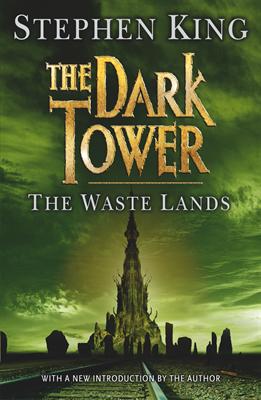
3. The Dark Tower III: The Waste Lands by Stephen King was published by Sphere Books Limited in 1992. RRP £7.99 (Paperback)
4. The Dark Tower IV: Wizard and Glass by Stephen King was published by Hodder and Stoughton in 1997. RRP £7.99 (Paperback)
5. The Dark Tower V: Wolves of the Calla by Stephen King was published by Hodder and Stoughton in 2003. RRP £6.99 (Paperback)
6. The Dark Tower VI: Song of Susannah by Stephen King was published by Hodder and Stoughton in 2004.RRP £6.99 (Paperback)
7. The Dark Tower VII: The Dark Tower by Stephen King was published by Hodder and Stoughton in 2004. RRP £6.99 (Paperback)

Joseph Conrad – Heart of Darkness

I picked this up due to the history behind the novel and curiosity as to what makes a canonical novella.

Firstly a note on the picture included to the left; I always try to get a picture of the copy of the book I own. I’ve only failed on one occasion and that was with Stephen King’s Carrie. I picked this one up as a collective of Penguin Popular Classics as I am a fan of recycling and the book is made from 100% recycled paper. However, I would advise not taking these books on holiday to hot countries as the spine melted in the intense Turkey heat and my book is now falling apart and I’m lucky to still have all 111 pages intact.

Anyway, enough with paper, let’s talk literature. From a modern perspective, Heart of Darkness wouldn’t have got through a first reading with a publisher and the bog standard rejection letter would have been sent, such is the poor quality of writing.

As for the frame story genre, I’ve never been a massive fan and Heart of Darkness isn’t going to sway me. I’m a simple person and I found it hard to follow and it didn’t hold my attention. I had to really concentrate to work out what was going on and I don’t find it an enjoyable experience when I have to work hard to understand a book.

The book is broken down into three sections and at first I thought they were really pointless. There are no definable breaks in the story and if anything they interrupt flow. However, I went away, did a little research and discovered that Heart of Darkness was originally published in three parts in Blackwood’s Magazine in 1902. Even though it’s been reprinted, it’s been kept as close to its original format as possible, which is a nice nostalgic touch.

So is the book any good? Chinua Achebe, author of Things Fall Apart, does not think so and says that the book is overly racist and that Conrad himself was racist. He launched this criticism in 1975 a full 51 years after Conrad’s death in 1924, and while his argument had credibility at the time, it is invalid as at the time of writing Heart of Darkness, racism was common and in line with the culture and thinking of the general population. The book and its connotations are acceptable within its own context.

That is reason why it is simply not possible to review Heart of Darkness from a modern literary standpoint; it doesn’t make sense to do so. It is easy to launch a scathing attack on a dead person; they can’t argue back. In fact, the counter argument was that Achebe was making a political statement. If that is the case, he shouldn’t use a 75 year old text to do so. Regardless of what Achebe says, Heart of Darkness is in the canon and his comments only serve to strengthen the fact that it is exactly where it belongs.

Heart of Darkness was published by Penguin Popular Classics in 1994. RRP £2.00 (Paperback) Originally published in Blackwood’s Magazine in 1902.

Mark Watson - Eleven

Rarely do I buy books because they are listed as the number one book in the Tesco book chart thing, but as I know who Mark Watson is, and I had no idea he also wrote novels as well as starring in the occasional Magners advert and telling jokes, I thought I’d take a chance.

Eleven is a book based on the idea of six degrees of separation. In the case, as the title might suggest, it is eleven degrees of separation instead. Very clever Mark.

There aren’t many negative points to make about the book. The characters are really well constructed and fit in well with their surroundings. There always seems to be a reason for every scene and the individual set pieces link together well.

There were a few stand out moments and the first is Mark Watson’s lack of fear when dealing with extreme subjects. The main character, Xavier makes the mistake of dropping his best friend’s baby, ironically one which the couple struggled to conceive. It’s a moment of complete seriousness doused in humour that literally causes the jaw to remain firmly open for about ten pages.

I also get the feeling that Mark is one of these people (let’s call them perfectionists) that picked up on every single misspelling or out of place punctuation because the entirety of Eleven’s 388 pages are extremely polished. It makes a book much more enjoyable to be able to read it from A to B without being removed from the story by some adolescent sentence structure. While some of my other reviews highlight some of the smallest mistakes, and may seem petty, it’s for good reason. If Mark can write a story of over 350 pages without making a mistake, why can’t every other published author?

Going back to Watson’s ability to develop characters, he has written a character I find most intriguing; Xavier’s love interest Pippa. She is a strange mixture of driven, passionate and crazy and while being a bit of fruit loop you can understand exactly why Xavier falls for her. And you also want to bash him over the head for being such an idiot towards her at times.

Eleven’s characters are what you make of them. Whereas some authors go mental explaining everything about their characters in order that you completely understand where they are coming from and the process and hardwork they put into developing such complex and intriguing psyches, Mark Watson simply states, ‘she is a cleaner,’ and lets the dialogue and context do the rest.

It is also the first ending of a contained story that has been satisfying, which is annoying because if it had been shit I could have doubled the length of the review ranting about how no good can ever come from reading an entire book.

I would recommend Eleven. That’s all there is to say really.

Eleven by Mark Watson was published by Simon and Schuster UK Limited. RRP £7.99 (Paperback)

Saturday, 17 March 2012

Stephanie Meyer – The Short Second Life of Bree Tanner

After reading and being appalled by the undeserved success of the Twilight books, I thought I would investigate this bizarre idea for a spin-off.

From the perspective of a small character who is in the book for all but five minutes reading time, Bree Tanner, can only be described as one thing; MONEY! In the pocket of Stephanie Meyer.

I mean, come on, who is she even trying to kid here? The story takes 178 pages to tell and they are not big pages either. There is an introduction as to why she wrote the book which is 3 pages long and if it takes that long to justify a story to an audience already hooked on everything that comes off the end of your pen then you are trying too hard to justify it to yourself.

It doesn’t add anything to the original story at all and doesn’t answer any unexplained instances. All in all, pointless. Actually, it did serve to show that Riley was a lot more of an idiot than first observed. His interactions with the gang of new vampires can only be described as that of a slighter smarter dumbass, making fun of his even dumber friends and getting angry when they do stupid stuff. It’s all very childish as is the dialogue and the narrative but then if you are going to write from the perspective of a 15-year-old immortal girl then I should expect nothing less.

With that said I actually enjoyed this book in its own context and the main for that is its length. Without having to write a novel, Stephanie Meyer can get away from repeating the boring drivel of the Twilight books as every word counts here.

So in summary, a short review of a book that while good by itself, should not exist in principle. This will be last time in invest in anything Twilight related. I’m moving on and getting over and encouraging the rest of the population to join me.

The Short Second Life of Bree Tanner by Stephanie is an Eclipse novella published by Little, Brown in 2010. RRP £11.99 (Hardback)

Stephanie Meyer - The Twlight Saga

For some reason I’ve been too polite to review these books but seeing as the literary world is spiralling out of control I thought it might be a good idea to take a look at where it all went wrong.

So far, I’ve reviewed three books that are essentially Twilight rip-offs which shows; a) how much people are buying into the supernatural love thing; b) The supernatural can be made to be really boring; c) Men no longer read.

There are four books in the series with a total of 2,227 pages, of which 100 are exciting and the other 2,127 made me want to die.

The first book, Twilight is roughly 300 pages of getting up in the morning, going to the same three classes, Edward stares at Bella, Bella stares back, rinse and repeat. And then in the last 50 or so, there are a few fast paced scene that make for slightly entertaining reading.. I couldn’t quite believe what I was reading. Even when Bella finds out Edward is a vampire it’s pretty much, ‘So, you’re a vampire.’ There is no fear or amazement. She simply seems bored by the whole notion which is quite the feat considering she is meant to be in love with him.

So how can Stephanie make her serious of books even more interesting? Introduce Werewolves! Oh wait, they aren’t actually Werewolves, they are Shapeshifters, as we are made aware in the final book but, frankly, who gives a shit. New Moon is not only the worst title, it’s the worst book.

It doesn’t matter what these dog things, they are still boring in contrast with the actual legends that created them, and it’s made even more boring when one of the Werewolves is in - that’s right - love with Bella. Introducing Jacob, the whiniest, most annoying character in the history of the world. When Jacob finds out that Edward is a vampire and Bella wants some vampire porking love, he first goes into a sulk and then gets mad and stamps his feet and then plays the best friend card while occasionally dropping in the odd, ‘WHY DON’T YOU LOVE ME?’ line. He goes as far as saying that they are perfect for each other, but who is he kidding? Edward is a one-hundred-plus year old vampire, Jacob is a prepubescent puppy who thinks he knows what life’s like. If he was born a few years earlier, he should have dated Avril Lavigne.

This is coupled with the fact that Bella spends the whole book in a depressed state because Edward has decided that being with a vampire is too dangerous for her after she gets a paper cut. There are four pages with just the names of months on them to show that nothing happened for a long period of time. This was my favourite bit and I wish Meyer had taken it upon herself to do this every time nothing happens in her books. Then we would have one novella instead of four over written novels that as more usual as door stops.

Eclipse is the best of the bunch, because, and it’s taken two books to get here, something actually happens which warrants writing about. A big fight with werewolves and vampires and actually using your characters to create excitement.

However, while this was happening, Bella has decided she is going to be a massive dick. After saying she is in love with Edward, he is her shining star, her one and only, she will never love again blah blah, blah - she then goes and kisses Jacob and tells him she loves him. He kind of forced it on her but you can forgive him because he was already a dick. Bella can fuck off.

The final book, Breaking Dawn coming in at just over 700 pages and is a major waste of time - mainly because half of it is written from the perspective of Jacob. After having to listen to his whining from the third person for three books, having a dose of it straight from the werewolf’s mouth was cringe-worthy. It was literally whine, whine, whine some more and when I’m done whining about that I’ll whine about something else. Literally, he whined about Bella marrying Edward. He whined about having his wolf pack split up. He whined about having all their voices in his head. It goes on and on and on.

Then when Bella’s baby is born - half vampire, half human, something that Dracula couldn’t manage in Van Helsing but in this world were vampires can walk in the day and look like diamonds, it’s easy – Jacob decides that he is linked to the child and that they are going to spend their lives together. Bella is angry at this, not because of the paedophilic connotations associated with this whole ‘linking’ thing, but simply because she can’t accept the fact that he likes the baby more than her and this, and everything I’ve mentioned above is the thing that pisses me off the most.

In a world of vampires and werewolves, even though she hasn’t been exposed to it for long, Bella gets so caught up on the mundane childish relationship garbage that happens to 14 to 16 year olds in school with all their mortal friends. I was under the impression that if you were exposed to the supernatural world you would be a little bit awestruck, confused, frightened or any other sensible relative emotions. Bella shows none of these and settles for apathy, and this is captured perfectly in the films where she could be replaced by cardboard cut-out. I’ve seen the trailer for the new Breaking Dawn movie and even there, the smile is completely forced.

I can’t believe the extreme furore the books have created with this Team Edward, Team Jacob stuff and the sheer amount of money, Meyer has made from it. I don’t think the quality of stories merit the success and acclaim they have received and I also think a lot of genuinely good books get overlooked because of it.

I didn’t like The Twilight Saga. It took a lot of things I liked, romance included, trivialised them and destroyed their power through uninteresting storytelling and bad writing. However, the sales and acclaim speak for themselves. Stephen King agrees with me, the rest of the world does not. After Stephanie Meyer and J. K. Rowling can the next big thing please be something worth reading.

The Twilight Saga bibliography:

1. Twilight by Stephanie Meyer was published by Little, Brown in 2005. RRP £7.99 (Paperback)

2. New Moon by Stephanie Meyer was published by Little, Brown in 2006. RRP £7.99 (Paperback)

3. Eclipse by Stephanie Meyer was published by Little, Brown in 2007. RRP £7.99 (Paperback)

4. Breaking Dawn by Stephenie Meyer was published by Little, Brown in 2008. RRP £7.99 (Paperback)

Audrey Niffenegger – The Time Traveller’s Wife

This one was an optional university set text and a highly acclaimed/much talked about book. I couldn’t help but see what the fuss was about. Also the concept of time travel has always fascinated me and I’m always interested to see how different authors go about obeying the rules and, most of time, breaking them.

However, being ground-breaking in crossing genre’s doesn’t necessarily mean that it’s a good book. In fact, despite all its dressing up, it is essentially still Chick Lit, the story of how much a girl loves a guy and cries all the time. The main difference between this book and most of other Chick Lit is that nine times out of ten, the guy is actually doing something massively stupid in order to upset his female counterpart. So when Clare starts getting angry with Henry, I really sympathised with him; and also thought Clare was a massive twat. Granted, it is hard having a relationship with someone who is away a lot, but it’s the whole ‘not appreciating how amazing the situation is and treating it like it’s normal’ that I can’t never accept from characters (more on this in the next review), and Clare epitomises this throughout the novel.

Also, it feels like an absolute waste to use an original concept of a man constantly travelling through time on something as mundane as getting married and having a relationship. Concepts are only original once and to use time travel to effectively commit paedophilia and sleep with your wife behind your own back seems wasteful.

I also find that with these novels based in the real world, there is always a get around with money. In this instance, money being a problem is removed from the equation by Henry being able to win the lottery at a whim. At least the story makes this viable where as in Jules Hardy’s Altered Land is was by pure chance that one of the main characters invested in Microsoft and could afford to be an alcoholic.

However apart from that, there is something else that made me switch off completely and the same thing happened with Byatt’s The Children’s Book and Vikram Seth’s An Equal Music. Niffenegger spends a lot of time talking about art. Incidentally, she herself is an artist. It’s this sort of stuff which really grinds my gears. Authors writing about stuff they want to write about, going into huge amounts of unnecessary detail which don’t add to the story at all. It’s only there for the author’s benefit, not the readers. Clare could have been anything as a character, but because Niffenegger is an artist, Clare’s an artist too! It would be the same as me writing about working in an office, going into vast details of what I do from day to day, which would be really fucking dull. And no one cares.

I’m being a tad unfair by lumping Seth and Byatt in with this as they actually researched their subject matter whereas as Niffeneger has copied and pasted something she already knew a lot about.

That said, the book is still good, just not great as it could have been with a little more stuff going on that just chasing a girl through time. Who was it chasing time through a girl, I’m not quite sure.

The Time Traveller’s Wife by Audrey Niffenegger was published by Jonathan Cape in 2004. RRP £7.99 (Paperback)

Steve Voake - The Web of Fire

The Web of Fire is the follow up to The Dreamwalker’s Child which I reviewed all the way back in July 2010. In that reviewed I stated that while it was a good book with many original ideas driving it, it also borrows heavily from Star Wars and that the bad guys are heavily influenced by the Nazis.

In this second book, most of Star Wars stuff has disappeared (with the exception of Odoursin who with his new scars would probably be a spitting image of the Emperor) but the Nazi stuff comes back in full force. One scene could be ripped right from the front lines of France in the 1940s.

Imagery aside, there are a lot more minor issues. The Dreamwalker’s Child is a well crafted first novel where as The Web of Fire feels more like it was demanded than a planned sequel. These issues start on page 55 where one of the characters fancies himself as ‘punctual’ for arriving at a meeting right on time. However, if you are outside introducing yourself to the reception at bang on three o’clock when your meeting is at three, you are effectively late. I do realise this is a kids book and that perhaps I shouldn’t take this sort of thing too seriously, but punctual is early. Over obsessive with time is arriving dead on start time.

Through the rest of the book, these mistakes continue in the form of badly constructed sentences, unexpected gender changes and confusing paragraph construction that make the book a lot harder to read and understand what’s going on. Not good for the kids.

That said, the book is 329 pages long and I stopped complaining after page 166. I think this is more to do with the fact that I got bored, which is more of indication that I’m not the target audience than the book is bad, but I enjoyed the first one so this reaction left me quite confused and I think it goes back to the fact that it feels like a forced sequel.

There are scenes which the author wanted to write and these are really good and enjoyable to read. However, they are linked together with passage for which, if I’m honest, I just switched off for. It was like taking a bus across Europe. You take in the cities you visit whilst being asleep on the journey in between, occasionally waking up to take in the scenery.

Also the endings don’t add up. The first one was finished, done, completed. We understood the plot twist at the end and it made sense. This one doesn’t agree with the first, or it sort of loosely does but doesn’t quite get it right (trying really hard not to spoil it for anyone who may want to read it.)

I wouldn’t recommend reading this if you enjoyed the The Dreamwalker’s Child. It doesn’t live up to the high standards set by the first book and unnecessarily extends what I considered to be a complete story.

The Web of Fire by Steve Voake was published by Faber and Faber in 2006. RRP £6.99 (Paperback)